Fig. 0 · General arrangement
I build software that shows its working.
Evidence tools, a public registry, a studio's booking site. Each one publishes its own limits — including the claims I measured and withdrew.
Scroll
Figures 1–4
Selected work, drawn to scale
Fig. 1 · The professional platform
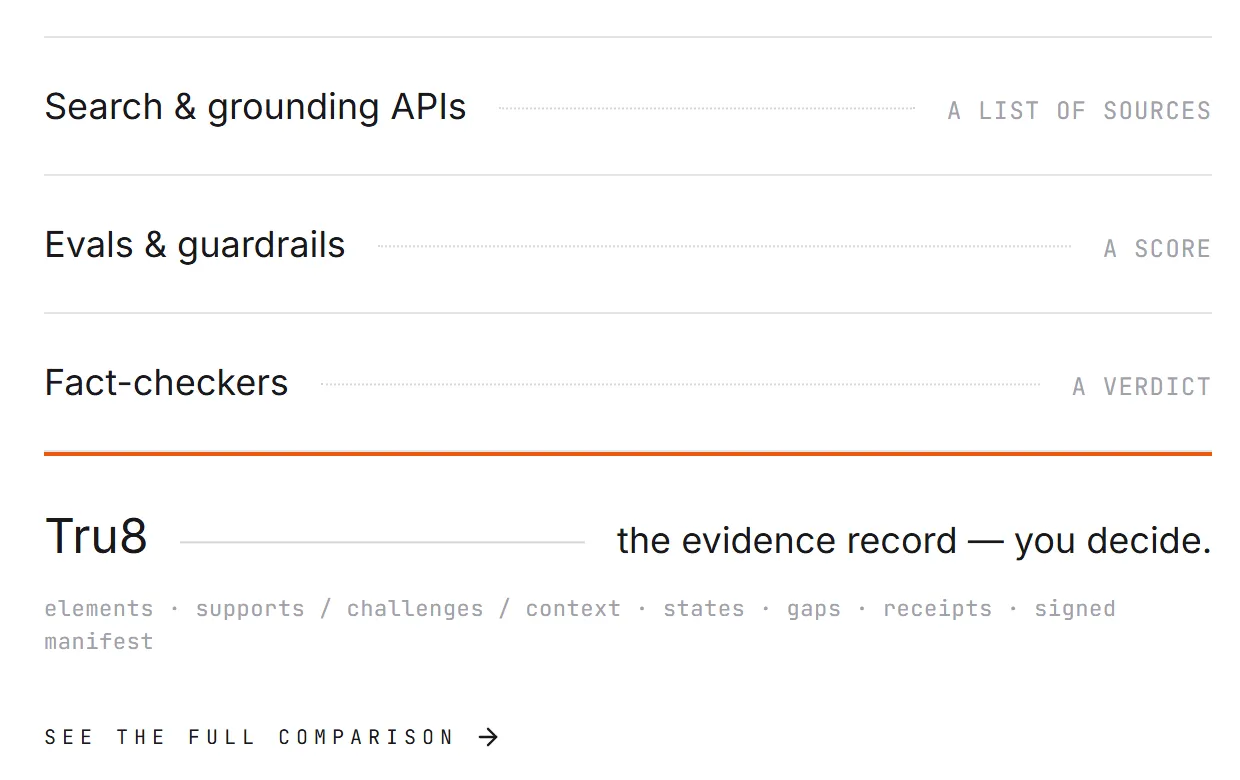
Tru8
The problem: Checking what's actually true takes hours of digging through sources of wildly different quality. Tru8 does the digging: give it a claim, and it gathers evidence from the open web and specialist APIs, sorts it by how close each item sits to the facts, and hands you a signed record.
The principle: It never tells you what to think. It organises; you decide.
ONE CLAIMONE SIGNED RECORD
Drawn by S. Yates-Smith
Status Flagship — in active build
Scale 1 : 1
Rev Current
Fig. 2 · The time-saver
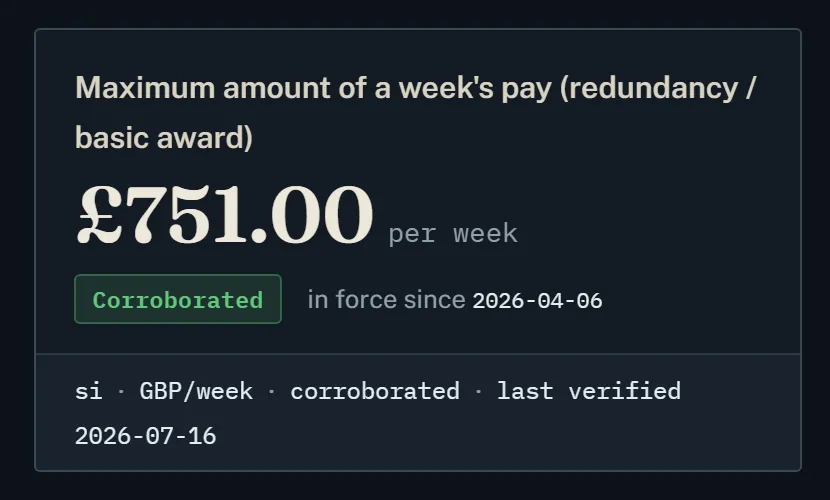
Statbook
The problem: UK employment figures — statutory rates, limits, thresholds — are scattered, frequently updated, and painful to cite with confidence. Statbook is a single registry where every figure is permanently cited to its governing authority.
The honest outcome: It re-verifies every figure nightly and publishes a public corrections log. The numbers stay right while everyone sleeps.
- Python
- JSON API
- Signed manifests
EVERY FIGURE CITEDCHECKED NIGHTLY
Drawn by S. Yates-Smith
Status Live
Scale Small, on purpose
Rev Nightly
Fig. 3 · The clever one
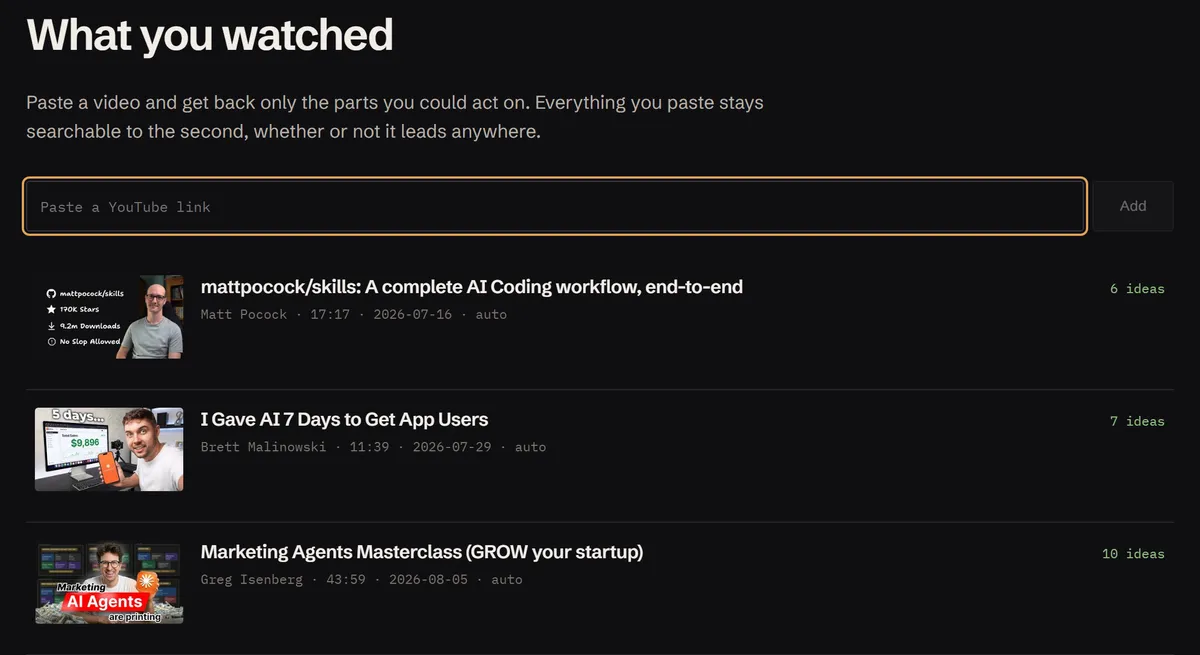
Bearing
The problem: The internet is full of hour-long videos with ten genuinely useful minutes buried inside — and no way of knowing whether those minutes matter to the code you're actually working on.
What it does: Paste a YouTube link. Bearing transcribes the video and distils it into Findings, then reads your GitHub repositories and points at exactly where each finding could be applied. When something's worth acting on, it writes a Work Order you can hand straight to your coding agent.
AN HOUR OF VIDEOA WORK ORDER
Drawn by S. Yates-Smith
Status Working end-to-end
Scale 1 : 1
Rev A
Fig. 4 · Client work
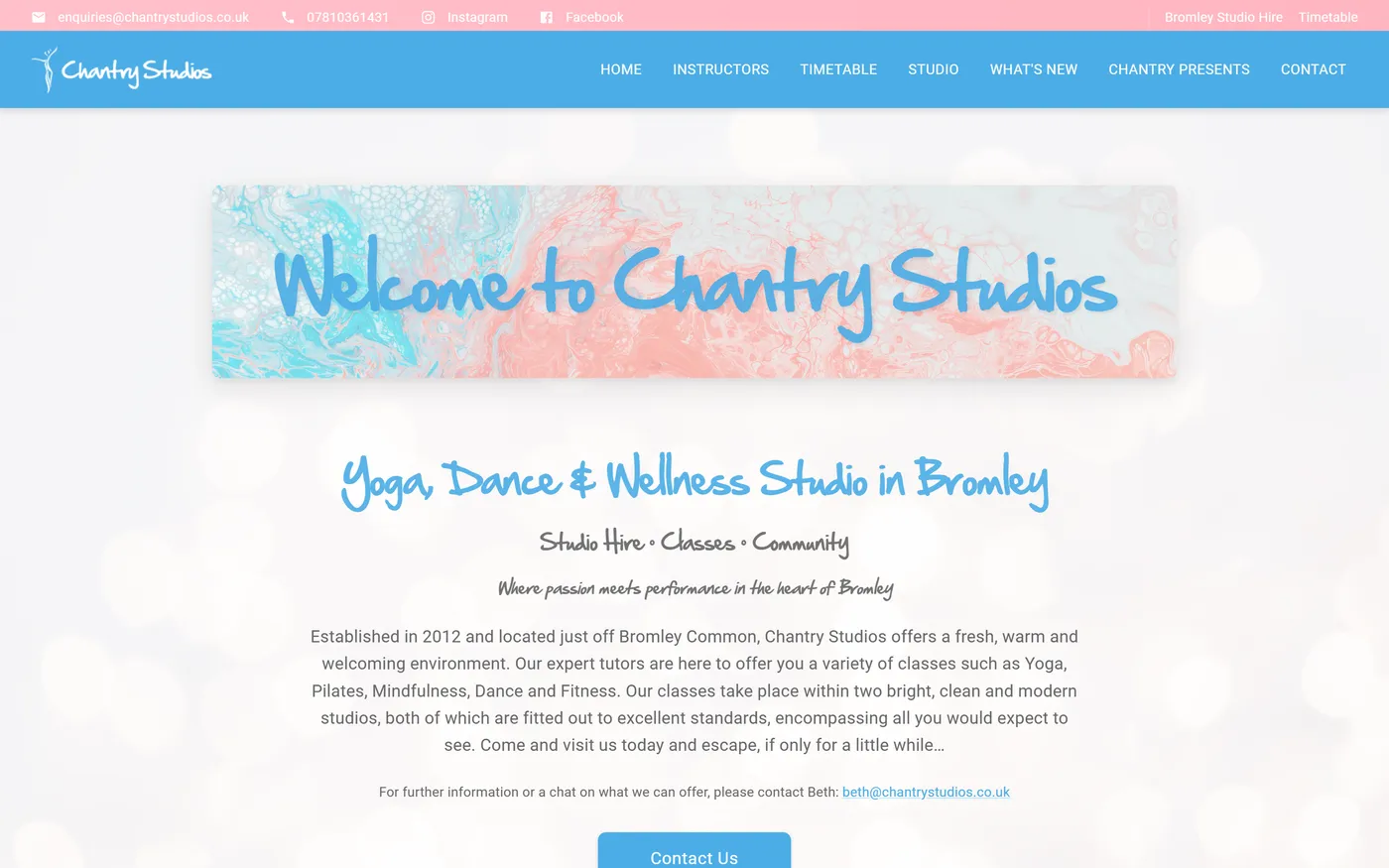
Chantry Studios
The brief: A dance studio in Bromley with classes, instructors and studios to hire, and no single place people could find any of it. It runs as a static React site — no backend, no CMS — so it's quick and costs almost nothing to host.
What it does now: It sells. Events and retreats take bookings and payment, with terms, health screening and dietary needs collected before checkout rather than chased afterwards.
A BROCHUREA BOOKING
Drawn by S. Yates-Smith
Status Live
Scale 1 : 1
Rev Ongoing
Also on the workbench
- Your Away DayA trip planner for travelling football fans — plan the whole away day around the fixture, not just the ninety minutes: where to eat, drink and stay near the ground.LIVE
- SilenceA deliberately quiet reflection app, paced by the phases of the moon. No streaks, no nagging.IN DESIGN
- AuroriumInteractive gamebooks whose stories and artwork adapt to every choice you make.IN BUILD
- CubeYour tools, models and scripts as faces on a 3D cube — wire them together and watch them run.IN BUILD
- This websiteIts own case study — hand-coded, no tracking, and a running list of what I'd do differently.You're on it
Fig. 5 · Cross-section
The engineer
Fig. 5.1
photograph pending —
the drawing came first
Head: tidy code, plain English, and a suspicion of any claim that arrives without a source.
Hands: currently building Tru8 and Bearing — two tools that gather the evidence and then refuse to draw your conclusion for you.
Heart: claims you can check, write-ups that admit what didn't work, and telling you when I'm not the right person for the job.
Location: Bromley, London — happy working with anyone, anywhere, over a video call.
Assembly instructions
How I work
-
A conversation
What's actually broken, and what you've already tried. I mostly listen. Half an hour is usually enough to know whether I'm the right person.
-
A plan you can read
One page: what I'll build, what it costs, and what it won't do. The limits go in writing before the work starts, not after.
-
The build
A link to the work in progress from day one, and a written update every Friday. You watch it go wrong at the same time I do.
-
Handover
You own everything — code, accounts, domain — documented so the next developer never has to ask me anything.